

 0
0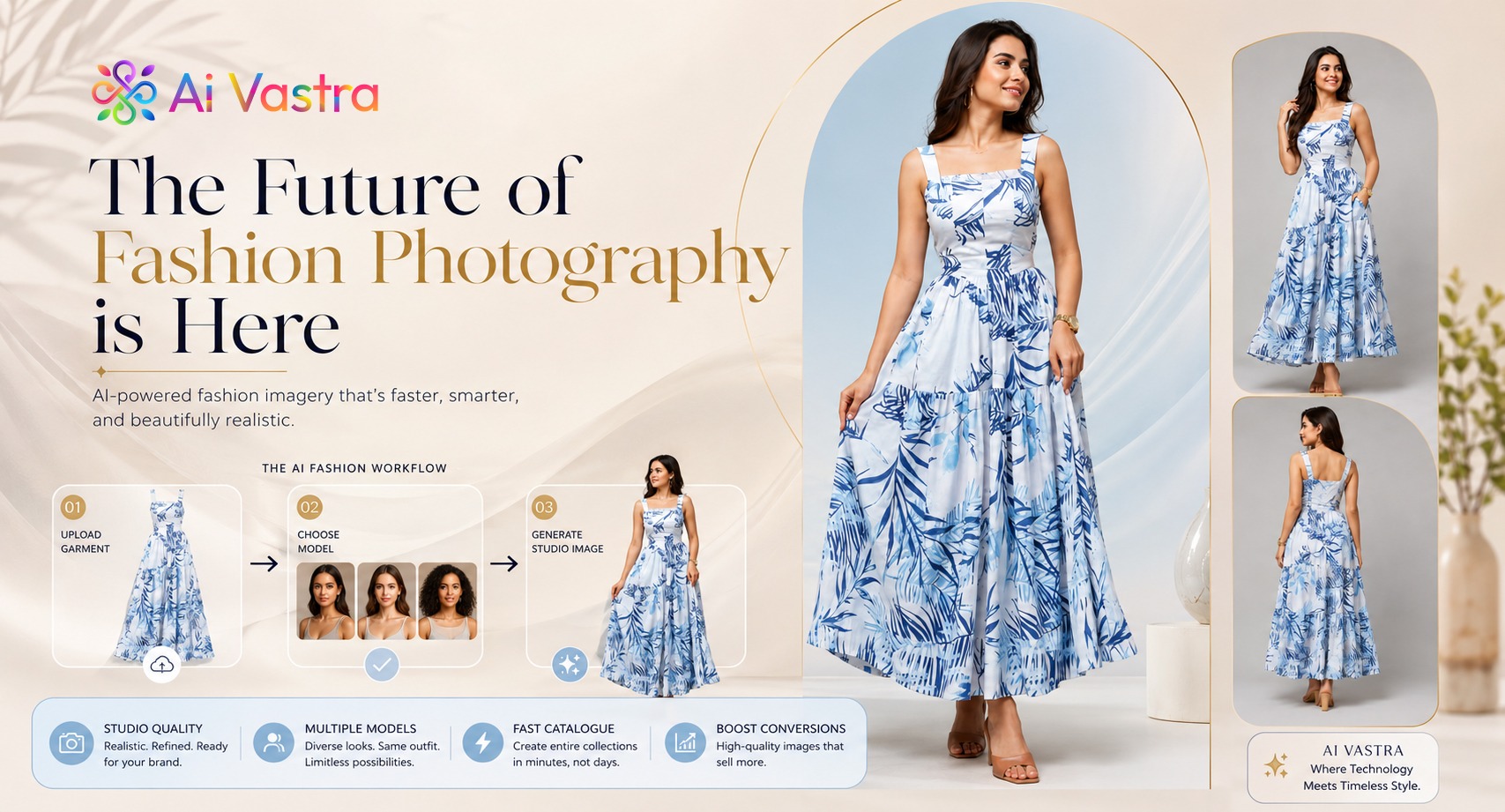
The digital storefront functions within a sharp visual economy. When online customers browse attire, they can’t touch the weave, test the extent or gauge a garment’s weight. Since of this sensory gap, your visual resources must do all the offering. Utilizing vital Fashion Product Photography changes an inactive advanced show into a dynamic engine for income development. For the advanced retail brands looking to capture and advertise share, working with specialized stages like AI Vastra enables the consistent creation of high-converting, scalable imagery that outpaces the restrictions of legacy studios.
To create a certain visual impression, it is essential to move away from the non-exclusive formulas of the standard competitor sites. Scaling an online apparel brand successfully requires creative production workflows, accurate technical solutions and optimized resources.
1. Visual Presentation Methodologies: Re-energizing Form and Context
Each brand has to decide on a must-have strategy for showing its collections. Your presentation style defines your entire brand character and directly impacts the conversion rates of customers.
Dynamic Lifestyle Photography
Shooting clothing on live models gives a primitive spatial context. It is a reflection of the way a fabric falls, wrinkles, and reacts to human growth. This auxiliary setting allows consumers to survey fit precision, which fundamentally decreases return rates.
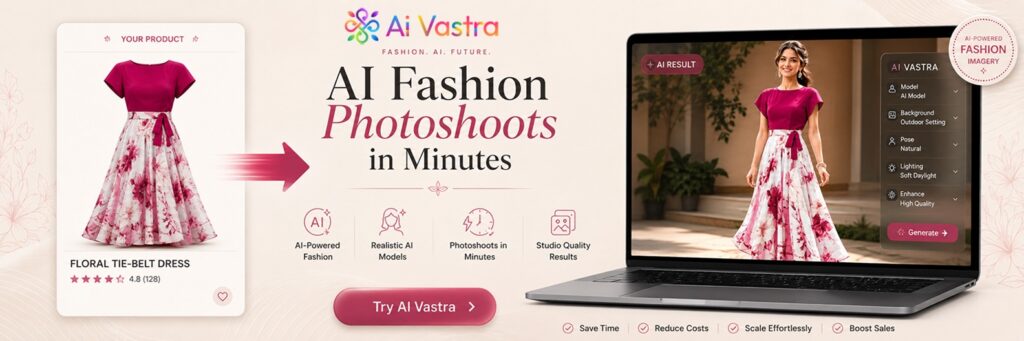
Traditional photo shoots come with large overheads in terms of cost, casting skills, organisation, hair and make-up coordination. But, with next generation solutions such as AI Vastra, brands can now instantly create varied, hyper-realistic show imagery from simple flat-lay inputs. This new method is a game changer for high impact product photography for fashion brands.
The Dimensional Invisible Mannequin
The ghost model process strips away all basic diversions, keeping the customer’s eye settled completely on the apparel’s specialized development. By consolidating isolated outside and inside coat or dress exposures in post-production, editors make a three-dimensional, hollow form. This clean approach is idealized for building exceedingly standardized E-commerce product images that look steady over broad multi-brand computerized marketplaces.
2. Studio Engineering and Environmental Control (Specialized)
Results worthy of a commercial demand a controlled, thorough environment. Remove the variables to ensure colour consistency across regular drops and maintain a premium standard for your Fashion catalogue photography.
The diffused multi-point lighting window light is characterised by the fact that the color temperature varies continuously during the day. Configure electronic strobe, 3 point settled instep. Use a simple key light at a 45-degree angle to suggest basic weight, soften contrast with a diffused umbrella fill light on the opposite side, and add a dedicated background light to cleanly separate the object from the background.
- Aperture and Sharpness Mapping: To keep the front seams and removed hems of a garment similarly sharp, avoid shooting wide open. Set your camera lens to its optical sweet spot. Match this with a bolted local ISO of 100 to eliminate computerized grain, ensuring your images look fresh indeed when zoomed in on high-resolution screens.
- The Consistent Clear: Use a heavy-grade, non-reflective paper roll in immaculate white or unbiased light gray. Make sure the paper bends gracefully, and you don’t get a hard crease where the wall meets the floor. Remove distracting skyline lines behind the subject.
3. Pre-shoot promotion and Physical quality control
Your on-set preparation is critical for the success of your digital resource pipeline. Small physical oversight becomes a major headache quickly in post-production retouching as it compounds.
The Golden Rule of Apparel Prep: A single waiting overlay or a clean speck can ruin an otherwise perfect shot. Time spent handling physical quality control on set spares hours of pixel-level altering later.
Fashion E-commerce | Check Here
Every garment must be altogether prepared before it goes in front of the lens. Use a commercial-grade brass-element steamer to lift wrinkles without leaving water spots on sensitive materials like silk or satin. Keep a committed utility pack on set containing anti-static build-up rollers, double-sided texture tape to settle shifting collars, and heavy-duty, straightforward pressure clips to quietly fix loose fabric on the posterior of your forms.
4. The Conversational Point Architecture
A single front-facing thumbnail photo leaves as well numerous unanswered questions for online customers. To construct a comprehensive workflow for your fashion catalogue photography, each apparel SKU should include a standardized sequence of particular visual perspectives.
Capturing these different perspectives fulfills buyer interest right on the product page. Buyers can see the finer details such as clean stitching lines, quality buttons, and useful zipper closures. This also reduces buyer’s hesitation and builds confidence in the company quickly.
5. Resource Allocation and Algorithmic Improvements
The life of an image continues long after the shutter has clicked. Post-production is where raw records are changed into web-ready visual assets.
The first line of defense against costly returns is color calibration. Change your e-commerce product photos on a color accurate screen so the advanced record matches the dye in the fabric in real life under normal lighting conditions. This protects your brand from “product not as pictured” complaints.
AI Fashion Photography | How AI Fashion Photography Functions
Finally, adjust visual quality with site execution. Expansive, uncompressed record’s moderate down location speed, harming portable client encounters and lowering search engine rankings. Convert your finalized resources into advanced, efficient image formats, compressing record sizes whereas keeping surfaces sharp and clean over all devices.
Conclusion
Building a versatile approach to fashion product photography requires mixing exact specialized habits with advanced visual devices. Standardize your studio setups. Plan your stock carefully. Learn premium product photography for fashion brands. And give online customers the clarity they need to buy with confidence.
Legacy photography strategies can quickly bottleneck your generation as computerized retail accelerates. AI Vastra’s advanced automation helps fashion brands to bring products to market faster, reduce shoot expenses and create flawless visual assets that convert casual browsers into loyal customers.



Comments (0)