

 0
0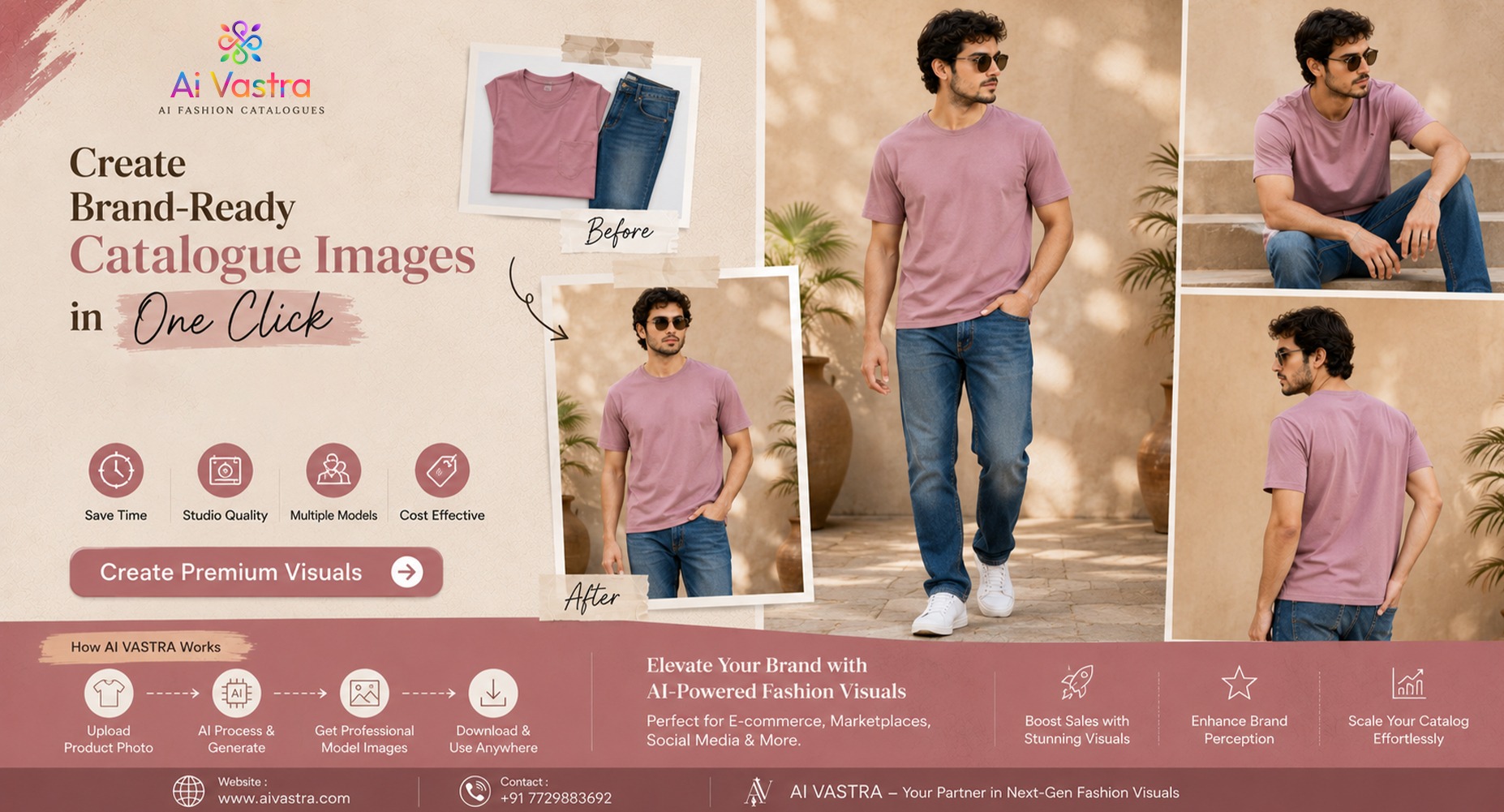
AI fashion photography is an advanced digital imaging technology that uses machine learning models and computer vision software to create high quality Images of Garment Draping without the need for traditional on-set production. This automated system generates realistic displays of apparel from flat garments or basic reference photos of mannequins, doing away with the need for physical studio sets, model bookings and complex lighting setups. E-commerce companies and clothes retailers can embed artificial intelligence into the production pipeline to achieve fast image turnaround times, scale visuals without limits and cut costs significantly when producing high volume fashion catalogues.
What is AI Fashion Photography?
AI Fashion Photography is an image generation paradigm in which advanced generative models are used to digitally dress virtual models with physical apparel assets.
The process removes the need for real studio space, camera equipment, expensive model hire and trip logistics by producing better marketing materials purely on a computer.
The increasing adoption of the technology in the fashion and e-commerce industries provides retail companies with a cost-effective way to instantly update seasonal lookbooks, prototype styling combinations, and showcase large inventory variations without the expense of expensive physical photo shoots.
How AI Fashion Photography Functions
The technical execution of an automated imagery campaign is a standardized digital process designed to turn simple flat lay assets into dynamic marketing media:
Process Step by Step:
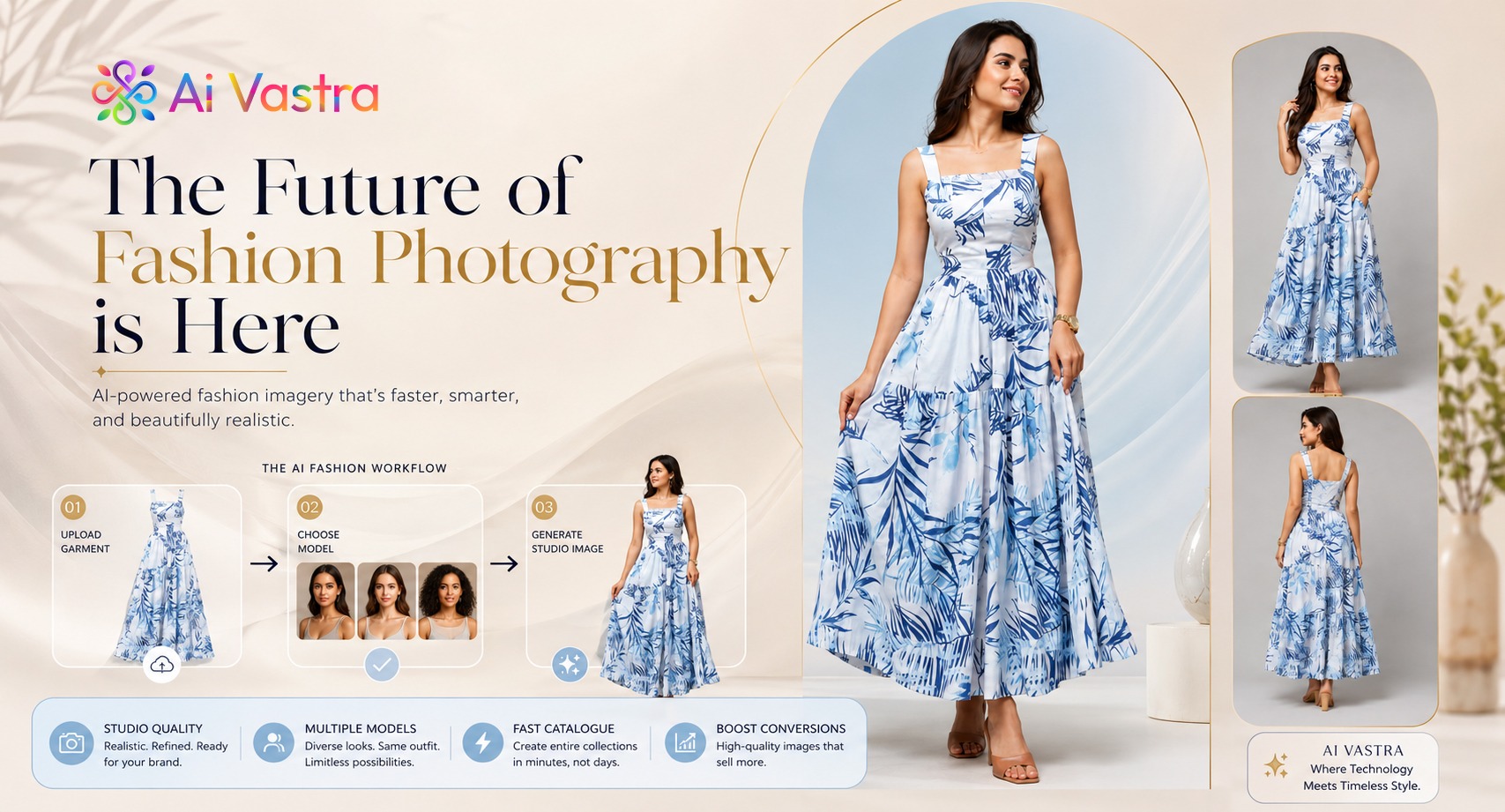
Provide Product Images: Initially, retailers should provide clear high resolution source images of original fashion products in either flat lays or simple ghost mannequins.
Use AI Tools for Rendering: Specialized generation platforms analyze the garment’s texture, drape, seams and fabric features to map its physical characteristics accurately.
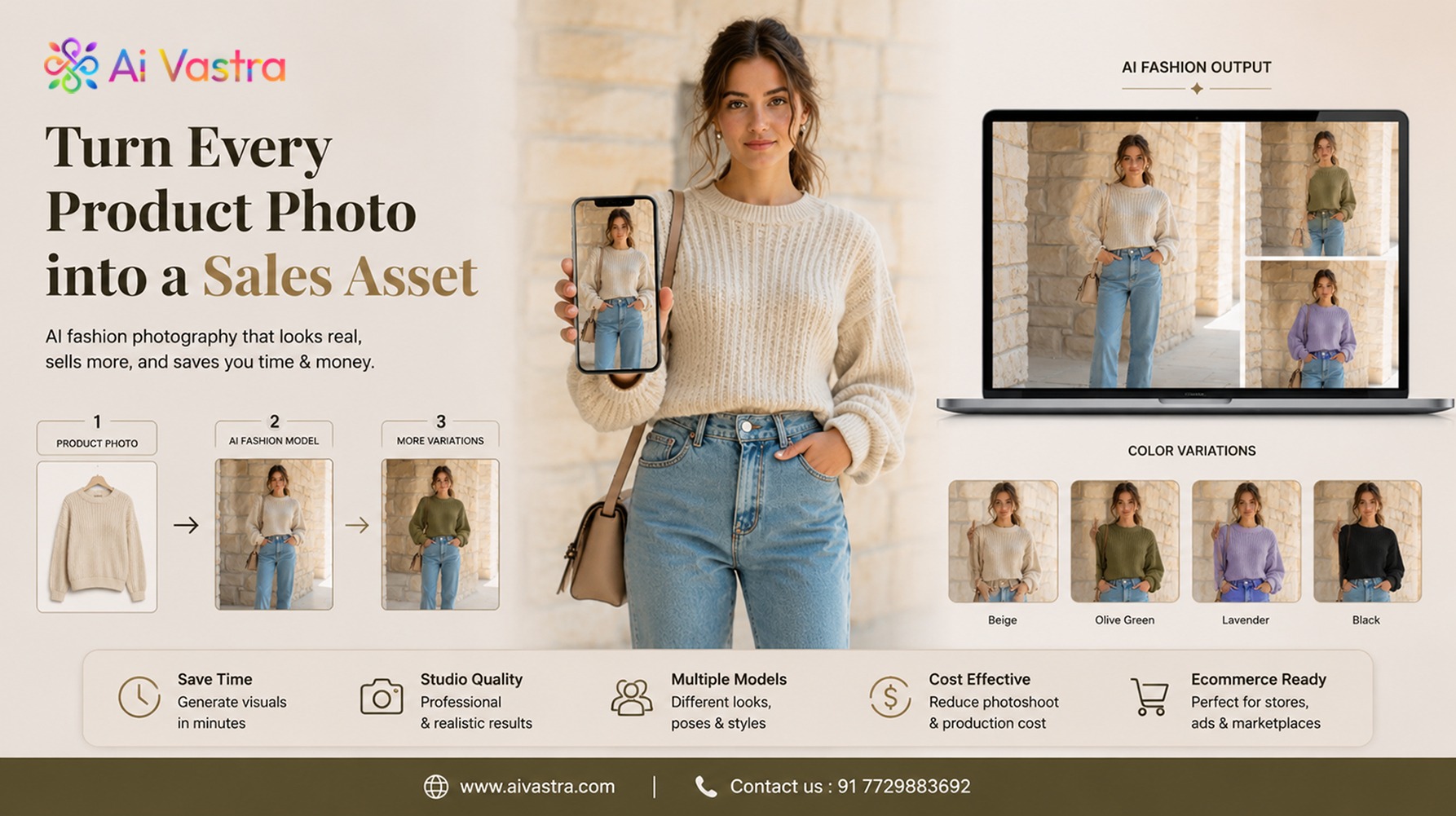
Model-Based Visuals: Users enter some demographic profile, background setting and posing style, and the software generates a completely synthetic, photorealistic model in the exact clothing item.
Export Ready-to-Use Assets: The completed high definition compositions are assembled, prepared, and exported following the technical listing standards of top e-commerce web marketplaces.
How Do AI Models Work
AI-generated fashion models are fully artificial, ultra-realistic digital avatars built with deep learning algorithms to present apparel lines. Rather than host real casting calls or work around the schedules of talent agencies, e-commerce enterprises can employ generative design software to construct bespoke virtual models from scratch. These platforms offer substantial personalization possibilities for body type, race, age, posing and styling to appeal to specific customer segments.
These digital identities are dynamic templates in the process of creating the catalog. A single source shot can be used by high-performance computer vision software to analyze the texture, seams and weight of the fabric of a physical garment and then drape the item over the frame of the synthetic model. Moving the entire product staging process to a computer lets firms avoid sample shipping problems, swap backgrounds on the fly and change web store layouts as needed.
Advantages of AI Fashion Photography for Brands
Faster Image Creation: Takes basic apparel shots to lifestyle imagery in a fraction of the time conventional studios take.
Scalable Content Creation: Show one piece of clothing on dozens of Virtual Models and backgrounds with no additional studio costs.
Solid Visual Results: Each listing includes correct frame sizes, matching lighting angles, and perfect color grading to make your storefront look professional.
Lower operational complexity: Removes the administrative headache of coordinating photographers, booking makeup artists and transferring physical inventory samples.
Supports High Volume Catalogs: Fast fashion companies with heavy weekly inventory drops can create listings as soon as products hit the warehouse.
Cost Comparison: AI vs. Traditional Photoshoot
On-set shoots in the traditional sense have a lot of financial friction and serious coordinating challenges. With a traditional catalog you have to rent studio space, hire human models, schedule creative crews and pay for extensive post production retouching. These fixed overhead expenses quickly balloon when trying to extend collection variants or shoot on location, leaving physical production extremely limited for fast-fashion cycles.
On the other hand, automated visual rendering offers significant cost savings as well as obvious time savings. Companies that swap physical sets for software interfaces can produce thousands of high-definition, web-ready photographs for a fraction of the cost of a traditional studio. This digital agility provides significant long-term scalability advantages, allowing retail companies to move resources out of transient logistics and reinvest them directly into product development.
Marketplace Application of AI Product Photography
Automated media generation is now a key part of the modern multichannel retail operation:
Shopify and Amazon Integration: Generative tools allow independent sellers and enterprise merchants to quickly build high converting lookbooks that meet strict marketplace image requirements.
Faster Listing Updates: E-commerce enterprises may have new apparel styles, color variants and seasonal drops online in an afternoon, keeping up with rapidly shifting customer trends.
Enhanced Presentation: HD rendering helps buyers to more readily see the texture, drape and fit of fabric, which leads to increased buyer trust and lower return rates.
Expanding E-commerce: The continuous offer of new and diverse lifestyle images increases the efficiency of social media marketing campaigns and improves customer acquisition.
Frequently Asked Questions on AI Fashion Photography.
What is AI Fashion Photography?
It is an automated imaging technology that uses generative machine learning models to digitally render garment assets on realistic virtual models.
What is the process of AI fashion models?
Deep learning algorithms create entirely synthetic personalities, and they use computer vision to effortlessly drape physical clothing onto their frames.
Is AI product photography effective for small brands?
Yes, it allows independent labels to make quality lookbooks without the huge fees of traditional studios and modelling agencies.
Can Artificial Intelligence replace traditional photo shoots?
While it can handle high-volume e-commerce catalogs and variation listings, traditional shots are still useful for artistic editorial campaigns
How can AI help with catalog creation?
It solves sample shipping issues and processes massive apparel volumes simultaneously, so new collections can be live in the afternoon.
Read More : The Complete Guide to AI Catalogue Photoshoots for Fashion Label

Conclusion: The Disruptive Potential of AI Fashion Photography in the Industry
Modern e-commerce enterprises that embrace software-driven studio automation are able to eliminate traditional production bottlenecks, providing them a huge competitive edge. Turning basic flat-lay photos into hyper-realistic lifestyle images helps enterprises selling clothes to quadruple their range of catalogs, try out styling variants on demand, and save operational costs considerably. As generative systems get better at precisely modeling fabric drape and realistic textures, fashion companies will have to embrace an automated media pipeline to scale content production, respond swiftly to retail trends and create a highly polished digital shop.

Comments (0)